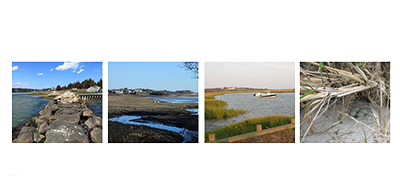
BSC Group Study Findings
The BSC Group Study found accretion of sand at the mouth of Halls Creek severely reduced tidal flushing, and:
- Caused build up of the sand bar and narrowed the channel
- Created methane odor, algae growth and insect swarms
- Has accelerated the loss of shellfish and wildlife habitat
- Promotes the spreading of invasive phragmites
Severe erosion of the barrier beach:
- Squaw Island lost 200 feet in less than 40 years and 18 inches of dune in 2010 alone
- Green Dunes oceanfront properties lost several feet of beachfront in 2010
- Seaside Park beach has continued to shrink The jetty at the mouth of the creek is failing:
The jetty’s stability has deteriorated over the past several years
- The jetty is unsteady—creating a safety hazard
- Several rocks have fallen into the creek creating an additional hazard
- The jetty is eroding on its western side and is two to three years from lying in the center of the channel
Actions required to protect and preserve the estuary:
Tidal flushing must be increased
- To reduce the growth of algae in the estuary, thereby ameliorating the methane gas odor on the creek’s east side, closer to the golf course
- To preserve the wetland habitat, protecting the estuary’s role in the ecosystem and protecting endangered species
- To stop the spread of phragmites which kills native wet land vegetation, sea grasses, eel grass and other vegetation
Nourishment of the barrier beach
- To provide storm surge protection against high water surges inside of Seaside Park and portions of the Hyannisport Club
- To contain the creek’s water level
Repair of the jetty
- To prevent sand west of the jetty from entering the creek and negating the benefits of work undertaken to increase tidal flushing and to nourish the beach
- To stabilize the rocks, as a safety measure
- To end the current erosion process which will prevent the jetty from the water flanking its left, or western, face
Our Plan: We’re going to….
Dredge
- Returning the channel to its 1959 depth of four feet below mean low tide to increase flushing — this would require 13,000 cubic yards of dredging
Nourish
- Using dredge “spoils” to nourish the Squaw Island barrier beach and appropriate Green Dunes beaches and the Seaside Park beach
Reconstruct the jetty
- Repairing and securing the jetty to keep the westerly sand from sifting through to the estuary, deterring further erosion to the jetty’s western side, and eliminating the risk to swimmers and watercraft
Construct a culvert
- Consider the construction of a culvert under the Squaw Island Causeway to create a natural flow of water through the creek — a step in preservation of the estuary for future generations, in the improvement of the water for shellfish habitat and in contributing to the objective of bettering its quality for all to enjoy
If we take NO action…. what might happen?
- A continued accretion of sand in the estuary resulting in: Continued reduction of tidal flushing action intensifying the impact of eutrophication, sulphur and methane odors, and ever-increasing insect swarms
- An increase in growth of invasive phragmites, raising the ground level as root systems develop, thereby choking natural plant species and — eventually — the entire estuary
- A loss of the estuary’s ability to perform its crucial role of support to our entire ecosystem, including shellfish, wildlife and plant habitat
Acceleration of the barrier beach erosion cycle
- Threatening the loss of protection from storm surges and of flood control for all stakeholders in the area
Failure of the incapacitated jetty, within an estimated 2-3 years
- Loss of the protection it currently offers
- Creating hazards to boaters, swimmers, and anyone who uses the adjacent waters
 Halls Creek Preservation Fund
Leave a comment